-
Understanding Music: Past and Present
N. Alan Clark, Thomas Heflin, Jeffrey Kluball, and Elizabeth Kramer
Understanding Music: Past and Present is an open Music Appreciation textbook co-authored by music faculty across Georgia. The text covers the fundamentals of music and the physics of sound, an exploration of music from the Middle Ages to the present day, and a final chapter on popular music in the United States.
Accessible files with optical character recognition (OCR) and auto-tagging provided by the Center for Inclusive Design and Innovation.
-
User Interface Engineering
Sarah North
This module-based open textbook for User Interface Engineering was developed under a Round 12 Textbook Transformation Grant and revised under a Round 18 Continuous Improvement Grant.
-
UWG Introduction to General Psychology
Mark Kunkel, Amelia Bagwell, and Rod McCrae
This open textbook for Introduction to General Psychology is a remix of newly-created chapters by UWG faculty and existing materials from OpenStax Psychology. The text was created under a Round Eight Textbook Transformation Grant.
Authors' Description:
This free textbook you are holding in your virtual hands is a labor of love. It combines eight brand-new and unique chapters with a dozen or so somewhat modified chapters from an existing freely available textbook in general psychology, and brings the original and the new work together in a way that we hope is a gift to you in your study and more importantly in your self-awareness. I’d like to tell you a bit more about the text, and how it came to be, here at the beginning of your journey with Psychology (and maybe with yourself!).
I taught my first Intro class in 1988, and I have taught this marvelous and challenging class most semesters since then. I have never been completely satisfied with the available textbooks: some were too difficult, some were too watered-down. Some were overly conceptually dense, some too thinly applied. All were expensive, especially for students who struggle to make their way and sometimes must decide between buying a $200 textbook and having something to eat.
And I could never find a textbook that:
- Introduced students to psychological knowledge not just as something to know, but as something to equip them to live differently, in self-awareness;
- Included a detailed yet accessible overview of the importance of psychological theory, and how it allows a new way of thinking and feeling and being in the world;
- Acquainted students with Psychoanalysis (mostly not about sex, as it turns out) as a provocative and helpful way to take up knowing, and self-awareness;
- Ushered students into the marvelous landscapes of Humanistic, Existential, and Transpersonal psychologies, not as mere anachronistic social movements or philosophies but as insistent demands to take up living, differently;
- Accompanied students in a new knowing about culture, and context, and how much of what we assume as roles and identity and even the Self is a function not of who we are, but of where and when we are; and
- Sketched the contours of Consciousness, of Development, and of Suffering and Wellness in ways that were more or less adequate to these topics.
So I wanted a textbook that gave all students equal access to learning, and brought to them these unique and transformative gifts, from psychology. The “free” part? That was easy, thanks to availability of a pretty good traditional OpenStax Intro Psych text. And the new chapters, adding up to another complete book, happened due to the kind sponsorship of two Affordable Learning Georgia (ALG) grants I received in 2016 and 2017.
This program sponsors development and use of open educational resources and in many ways its sponsorship allowed the development of this text. I am grateful beyond these words for ALG support.
-
Walking and Jogging for Fitness
Scott Flynn, Lisa Jellum, Jonathan Howard, Althea Moser, David Mathis, Christin Collins, Sharryse Henderson, and Connie Watjen
This open textbook for Walking and Jogging for Fitness at Georgia Highlands College was created through a Round Seven ALG Textbook Transformation Grant and updated with a Round 14 Mini-Grant. Topics covered include:
- Benefits of Walking and Jogging for Exercise
- Getting Started in a Walking and Jogging Program
- Adaptations to Stress
- Technique: The Art of Walking and Jogging
- Nutrition and Energy Requirements
- Injuries and Injury Prevention
- Appendix on Flexibility
2nd Edition: Editors' Description:
The deliverables of the mini grant were:
1. Mini-lecture recordings to aid in focusing the efforts of students by offering an overview of the chapter content.
2. PowerPoint slides for all chapters which align with the textbook to augment the content and increase the learning experience for students.
3. Chapter terminology checklists to provide an informational foundation for content.
4. Homework test questions for all chapters so that students can test their knowledge and identify content gaps.
5. Recorded visual demonstrations for activity-based exercise Labs that can be accessed as many times as is necessary to increase the understanding of performance expectations, and serve as a clear reference point for students.
-
Western Civilization I
Dee McKinney and Katie Shepard
This hybrid textbook and open course is a comprehensive set of teaching materials for Western Civilization I (until 1648), created through a Round Six ALG Textbook Transformation Grant.
Files are compressed into .zip folder format by lesson here. You can also view the original open course through LibGuides at East Georgia State College:
HIST 1111: Western Civilization I
Topics covered include prehistory and ancient history by region, the Middle Ages, the Renaissance, and the Reformation.
Accessible files with optical character recognition (OCR) and auto-tagging provided by the Center for Inclusive Design and Innovation.
-
Wicked Problems: A Science, Technology, and Society Workbook
Julie R. Newell, Tamara Powell, Brayden Milam, Lesley Gabel, Kaylee Polk, and Tyler Tait
This workbook for Science, Technology, and Society was created under an ALG Affordable Materials Grant. The workbook approaches STS 1101 through the lens of problems with high degrees of ambiguity where answers cannot be classified as right or wrong, but rather better or worse.
-
Work Measurement and Ergonomics Open Textbook
Robert Keyser, Parisa Pooyan, Lin Li, and Suad Awad
This open textbook for Work Measurement & Ergonomics was created under an Affordable Materials Grant. Topics include operation process charts, flow process charts, manual work, workflow and yield, manual assembly lines, service processes, motion economy, performance rating, and direct time study.
-
Work Measurement Study Open Textbook
Robert S. Keyser, Parisa Pooyan, Lin Li, and Suad Awad
This open textbook for Work Measurement Study was created under an Affordable Materials Grant. Topics include charting and diagramming, motion economy and work design, allowances, and static and dynamic direct time study.
-
World Civilizations I and II Video Textbook
Jayme Feagin, Bronson Long, Steve Blankenship, and J. Sean Callahan
This video textbook started with the creation of 73 supplementary 10-20 minute video lectures for World Civilizations at Georgia Highlands College through a Round 10 Textbook Transformation Grant. A Round 14 Mini-Grant enabled the team to create guiding questions, key terms, transcript, and table of contents for each of the 73 videos, followed by a public website to share these newly-organized resources with students and faculty. A Round 18 Continuous Improvement Grant allowed them to a written textbook version for students preferring to read.
Topics include prehistory, the classical world system, trade and the old world system, revolutions, imperialism and hegemony, the 20th century, and new global systems in the 21st century. -
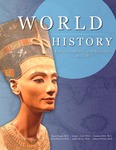
World History: Cultures, States, and Societies to 1500
Eugene Berger, George Israel, Charlotte Miller, Brian Parkinson, Andrew Reeves, and Nadejda Williams
Editor's Description:
World History: Cultures, States, and Societies to 1500 offers a comprehensive introduction to the history of humankind from prehistory to 1500. Authored by six USG faculty members with advance degrees in History, this textbook offers up-to-date original scholarship. It covers such cultures, states, and societies as Ancient Mesopotamia, Ancient Israel, Dynastic Egypt, India’s Classical Age, the Dynasties of China, Archaic Greece, the Roman Empire, Islam, Medieval Africa, the Americas, and the Khanates of Central Asia.
It includes 350 high-quality images and maps, chronologies, and learning questions to help guide student learning. Its digital nature allows students to follow links to applicable sources and videos, expanding their educational experience beyond the textbook. It provides a new and free alternative to traditional textbooks, making World History an invaluable resource in our modern age of technology and advancement.
Ancillary resources for this textbook were created under a Round 18 Continuous Improvement Grant. Another Continuous Improvement Grant in Round 25 led to the creation of an audiobook version.
-
World Literature I: Beginnings to 1650
Laura Getty, Kyounghye Kwon, Rhonda Kelley, and Douglass Thomson
This peer-reviewed World Literature I anthology includes introductory text and images before each series of readings. Sections of the text are divided by time period in three parts: the Ancient World, Middle Ages, and Renaissance, and then divided into chapters by location.
World Literature I and the Compact Anthology of World Literature are similar in format and both intended for World Literature I courses, but these two texts are developed around different curricula.
Accessible files with optical character recognition (OCR) and auto-tagging provided by the Center for Inclusive Design and Innovation.
-
Writing and Literature: Composition as Inquiry, Learning, Thinking, and Communication
Tanya Long Bennett
Authors' Description:
"In the age of Buzzfeeds, hashtags, and Tweets, students are increasingly favoring conversational writing and regarding academic writing as less pertinent in their personal lives, education, and future careers. Writing and Literature: Composition as Inquiry, Learning, Thinking and Communication connects students with works and exercises and promotes student learning that is kairotic and constructive. Dr. Tanya Long Bennett, professor of English at the University of North Georgia, poses questions that encourage active rather than passive learning.
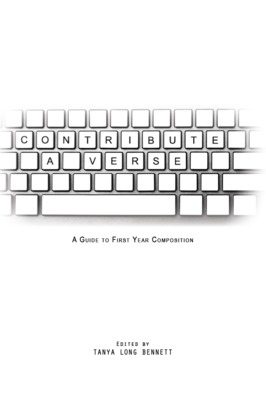
Furthering ideas presented in Contribute a Verse: A Guide to First-Year Composition as a complimentary companion, Writing and Literature builds a new conversation covering various genres of literature and writing. Students learn the various writing styles appropriate for analyzing, addressing, and critiquing these genres including poetry, novels, dramas, and research writing. The text and its pairing of helpful visual aids throughout emphasizes the importance of critical reading and analysis in producing a successful composition. Writing and Literature is a refreshing textbook that links learning, literature, and life."
Topics include:
- Reading Like a Professional
- Forming Perspectives
- Arguments
- Poetry
- Fiction
- Drama
- Creative Nonfiction
- Literary Analysis
- Research Papers
Accessible files with optical character recognition (OCR) and auto-tagging provided by the Center for Inclusive Design and Innovation.
-
Writing the Nation: A Concise Introduction to American Literature 1865 to Present
Amy Berke, Robert Bleil, Jordan Cofer, and Doug Davis
Writing the Nation: A Concise Guide to American Literature 1865 to Present is a text that surveys key literary movements and the American authors associated with the movement. Topics include late romanticism, realism, naturalism, modernism, and modern literature.
Accessible files with optical character recognition (OCR) and auto-tagging provided by the Center for Inclusive Design and Innovation.
Printing is not supported at the primary Gallery Thumbnail page. Please first navigate to a specific Image before printing.